Facebook
 X
X
 Pinterest
 Copy Link
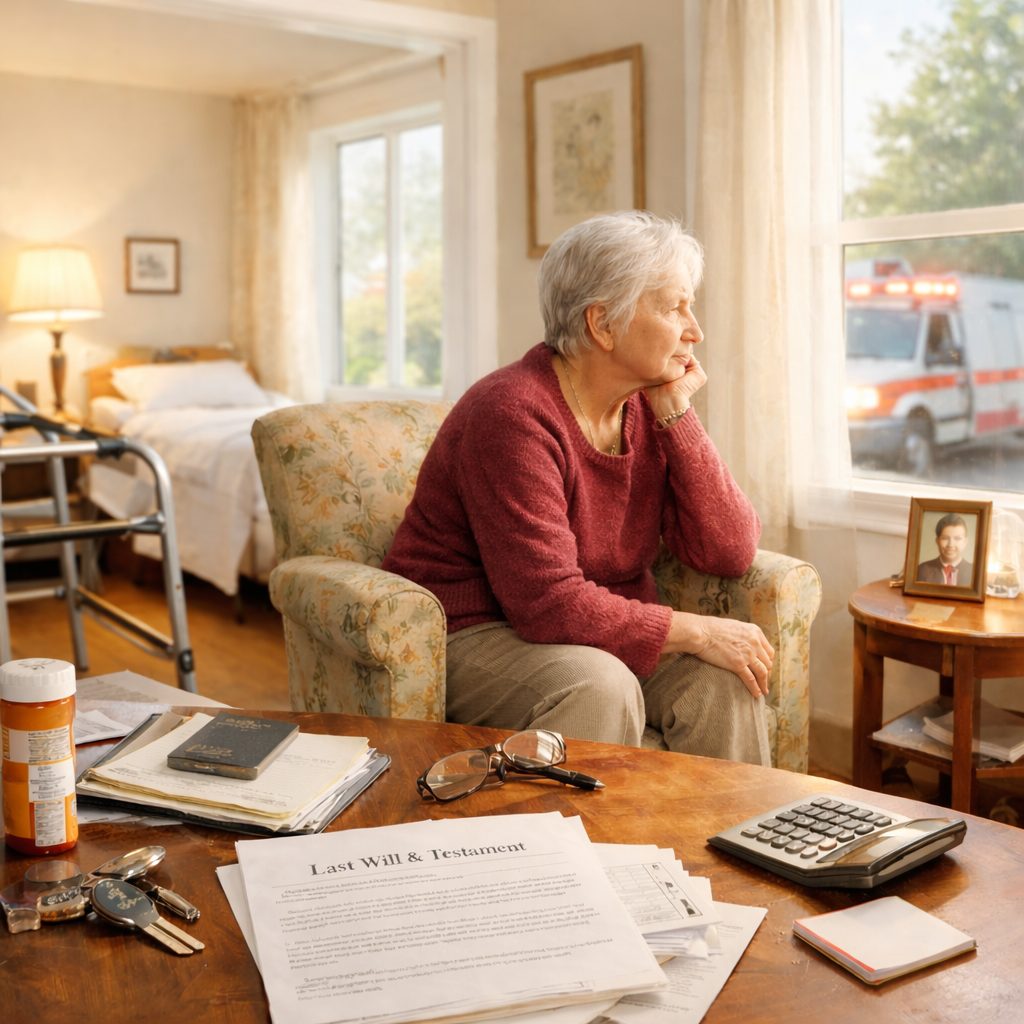
When independence, aging, and reality collide, and why preparation matters more than we think.
Debbi DiMaggio | March 4, 2026
Planning for aging isn’t about fear. It’s about dignity, choice, and giving yourself the best possible landing.
I’m sorting this out in real time.
This may not be the most uplifting piece I’ve written, but it may be one of the most important. Not all of us are fortunate enough to have children nearby or family members able to step in as caregivers. Because of that reality, each of us has a responsibility to think ahead about our future as we enter the golden years and beyond. Preparation matters. It deserves the same care and attention we give to planning a vacation or an overseas trip.
You wouldn’t show up at the airport without a passport, a ticket, or a destination in mind. Yet when it comes to aging, many people do exactly that. They assume things will work themselves out.
They rarely do.
Instead, create a checklist. Identify the people who will support you. Consider your future living situation with the same curiosity you would use when researching a hotel for a stay in a new city. When you plan ahead, you give yourself options. When you avoid planning, you risk missing your flight altogether. You miss the opportunity for a soft landing.
And if you fail to make decisions while you are healthy and clear-minded, the road ahead can become far more difficult for everyone involved. As I often say in Mindset in Motion, if you fail to plan, you are planning to fail.
Jackie’s story has brought that lesson into sharp focus.
Not long ago, Jackie fell.
She lives in an independent living community, not assisted living. That distinction matters more than most people realize. Independent living provides housing and community, but not the level of care someone may suddenly need after an accident.
Even though it was “just a fall,” she was taken to the hospital by ambulance—twice.
If Jackie had close family nearby, someone might have called her primary care doctor and driven her to urgent care or a clinic. Instead, the system responded the only way it could. An ambulance arrived and Jackie was transported to the hospital.
She became confused during the process, and honestly, so did I.
Shortly after returning to her apartment, she went back again because she couldn’t make it downstairs for meals. I still don’t know whether someone advised her to return or if she simply felt so overwhelmed that the hospital seemed like the safest place to go.
But a hospital is not designed for long-term support. It is for people who are acutely ill. When someone doesn’t have a strong support system, however, it can become a temporary landing place.
After her second visit, Jackie was discharged to a rehabilitation facility. From the outside it looked like a quiet residential building tucked into a neighborhood. Inside, it felt more like an extension of the hospital.
Many patients remained in bed for long stretches of time.
I couldn’t help but wonder whether they were exercising and regaining strength, or simply waiting.
Jackie told me that at night people were screaming. When I visited one evening around five o’clock, her room was dark. Even the bathroom light was out. I helped her get up and walk to the restroom.
Her fall had left her hip sore, but she wasn’t seriously injured. Ironically, after spending several days mostly in bed, her other hip began to hurt as well.
I asked about physical therapy. Jackie believed she had received it twice. When I asked a staff member, I was told therapy happened daily. When I pressed further, someone else explained that the therapy team came in the mornings.
The answers never quite aligned.
While I was out of town for two days, Jackie was discharged. She later told me she didn’t remember who drove her home or how she got there. She only recalled that it was an old jalopy and that she was so embarrassed she covered her head with a scarf.
You truly cannot make this up.
Throughout this process I have been reminded of something important: friendship has limits when it comes to care.
I am not Jackie’s nurse. I am not her family. I am a neighbor and a friend doing my best to help.
Jackie does have health insurance and a primary care doctor she likes, but scheduling appointments, coordinating medications, and navigating the healthcare system has become overwhelming for her. For a few days she agreed to work with an elder-care professional who helped organize communication, manage medications, and provide structure.
Then Jackie became worried about the cost and began resisting the help.
During this time I learned something that was both painful and clarifying. Many of Jackie’s behaviors, her frustration, forgetfulness, and sudden bursts of anger, are common signs of cognitive decline.
Hearing that was difficult, but it helped explain the chaos and confusion surrounding recent events.
Eight months ago, when Jackie was feeling well, she handed me a small list of four phone numbers: her fiduciary, her attorney, the Neptune Society, and a niece. As far as I know, her niece has never visited.
Jackie does not have a formal advocate living nearby. She has me and another caring neighbor trying to piece together what is happening. We have begun noticing inconsistencies in her stories, different versions of the same event told to different people. This too can be a sign of early dementia.
I mentioned to Jackie that she should speak with her fiduciary, but she kept repeating that he is not needed until she passes. That isn’t accurate, yet she continues to resist the idea. He did explain that he could coordinate care and help manage important decisions if she asked him to step in. However, Jackie emphatically denies that this is part of his role.
At the moment, we are at a standstill. He does have a copy of her trust and all the important paperwork in his possession for when the time comes.
Right now, everyday tasks are becoming harder for Jackie. Paying bills, scheduling appointments, keeping track of medications, even remembering to eat regularly, each one feels overwhelming. She also dislikes having people enter her apartment, and staff members sometimes hesitate because they worry she might become upset.
I understand her emotions. Beneath the anger is sadness and fear. She feels bored, frustrated, depressed, and uncertain about what is happening to her life. Even though she has financial resources, in her mind she often believes she does not.
Moments like this reveal why professional advocates are so important.
I will continue to support Jackie as a friend, but situations like this require trained experts who understand elder care, healthcare systems, and cognitive decline.
Seven months ago we celebrated Jackie’s move into independent living. She told me she couldn’t have done it without my help. That transition involved coordinating movers, packers, donations, banking changes, insurance, medical providers, utilities, appointments, and technology.
Soon we will be preparing for another transition, this time into assisted living.
Neither of us expected things to change so quickly.
But aging is unpredictable, and sometimes decisions must be made faster than we would like. By the time this story continues, Jackie may already have moved again.
Her story is not just about one woman navigating a difficult chapter. It is a reminder for all of us to pause and ask ourselves a few honest questions.
Do you have a plan for the years ahead?
Do you have a team you trust?
Does someone know your wishes if you cannot communicate them yourself?
Do you have a fiduciary, a healthcare directive, and a thoughtful strategy for where and how you want to live?
Or are you assuming you will figure it out later?
Planning for aging is not about fear. It is about dignity. It is about maintaining as much choice and control as possible. Most importantly, it is about giving yourself the best possible landing when life inevitably changes course.
If you are beginning to think about these questions for yourself or for someone you love, please don’t wait for a crisis. I’m always happy to share professional referrals and trusted resources.
The best time to make a plan is long before you need one.
Reach out anytime.
Jackie’s Story Continues: Why Planning Is an Act of Self-Care
When independence, aging, and reality collide—and why preparation matters more than we think.
As a real estate advisor in the East Bay, I often work with clients navigating major life transitions, downsizing, relocating, or planning the next chapter of their lives. One topic that comes up again and again is how to prepare for aging while maintaining independence, dignity, and choice.
This story is deeply personal. It follows the experience of a friend navigating unexpected health challenges while living alone. Her journey is a reminder that planning for the future, housing, healthcare, finances, and support systems, is one of the most important acts of self-care we can give ourselves.
For those living in Piedmont, Oakland, and throughout the East Bay, these conversations are becoming more common as many homeowners consider what their next chapter may look like.
A Simple Planning Checklist for Your Next Chapter
If Jackie’s story resonates with you, consider taking a few simple steps now while you have time, clarity, and control.
Start by asking yourself:
-
Do I have a trusted person or advocate who knows my wishes?
-
Have I created a healthcare directive and financial plan?
-
Do I understand my housing options if my needs change?
-
Have I explored whether I can age in place or if a move may eventually be needed?
-
Do my loved ones know where important documents are located?
Planning ahead does not mean giving up independence. In many ways, it protects it.
To help you get started, I’ve created a simple resource:
The Next Chapter Planning Guide: Preparing for Downsizing, Aging in Place, and Future Living Options
This guide walks you through the key conversations, documents, and housing considerations that can make future transitions far less stressful.
If you would like a copy, feel free to reach out and I’ll happily share it.
Let’s Start the Conversation
Every family’s situation is different, and these conversations can feel overwhelming. I’ve helped many East Bay homeowners navigate transitions including downsizing, relocating, and preparing for the next stage of life.
If you or someone you love is beginning to think about the future, I’m always happy to share resources and connect you with trusted professionals.
The best time to make a plan is long before you need one.
Reach out anytime.
Debbi DiMaggio
Debbi.DiMaggio@corcoranicon.com
DiMaggio Betta Group | Corcoran Icon Properties